


The Medieval Cities
- Jan 16, 2015
- 4 min read
For the first time in a long time, I managed to escape the fast-paced, exhilarating world of city living. Welcome to southern France. As soon as the train pulled into Avignon, France, my family and I were transported into another era. This city is full of history, made evident in the medieval wall that still borders the city center. It officially became part of France during the French Revolution, and is now known as a peaceful, well-worth walking town. And so it was.

The most interesting tourist attraction in Avignon was its Bridge to Nowhere. Literally: it’s a bridge to nowhere, as you can see in the photo below. Its official name, Pont Saint Benezet, comes from the Saint himself, who as legend has it, had a vision of Jesus Christ telling him to construct the bridge. The bridge was built between 1177 and 1185.

As you can see on the left, the bridge stops in the middle of the river.
Avignon was my favorite town we visited in southern France, maybe because of its small town atmosphere still mixed with a bit of a “cute” city feel, if that makes any sense. Its modest but contemporary shopping streets wind in and out through its cafes and plazas. It was a very comfortable and relaxing town; a perfect place to set our base as we began to head out on day trips.
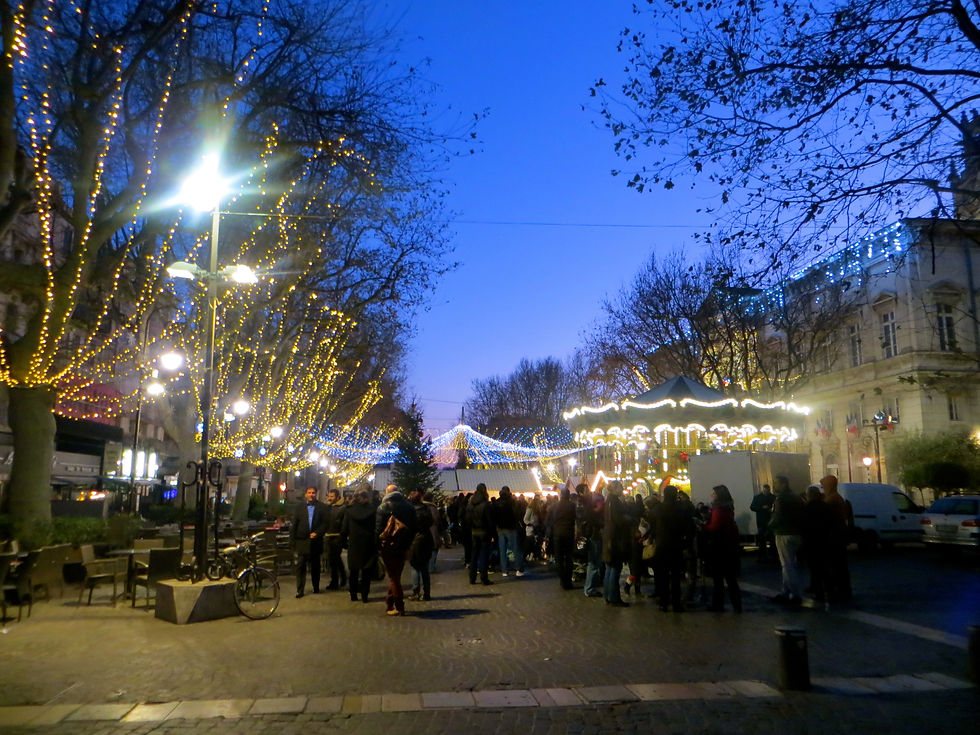
Day trips:
A walk through Arles, France is like a walk through the medieval era. I thought Avignon was a well-preserved medieval city until my family and I came upon this historical gem. Once one of the most attractive cities in the Mediterranean world during the Middle Ages, it is now the city that holds pieces of history that date back to the 1st century BC, such as the arena (or coliseum) and the Roman Theater. Of course, we tracked down both of these monuments.
The Arles coliseum is often compared to the better-known monster of an arena in Nimes, but once setting foot in the Arles coliseum you know you’ve walked into a something big, and not just literally. While a couple of towers didn’t stand the test of time, the rest of the arena was pretty well preserved considering how old it is. Climbing the stairs to the top row of the coliseum led to a small area where we got an entire view of the city.


Neighbor to the coliseum, the Roman Theater was just as impressive. While it could cram just 10,000 people in its 33 rows compared to the 20,000 that could fit into the coliseum next door, it was still amazing to picture people of all classes, gender and race squeezing into this amphitheater to watch a theatrical show over a hundred years ago. They had props, costumes, stage sets, and impressive scenery—the works.


Looks like Nelson got a little lost in the Roman Theater...
Fun fact about Arles: Van Gogh spent a year of his life living in this city where he was inspired to create some of today’s most well known paintings. While walking through the small city, we would happen upon a few plaques holding a replica of a Van Gogh painting. Then lo and behold, it sits just in front of the actual setting in which he painted. We stumbled upon “Café Terrace at Night,” with the old café still in tact, “Hospital in Arles,” and “Starry Night over the Rhone.”

Van Gogh's, "Hospital in Arles"--My dad actually tried to stand in for a man that was painted in the background of the original. Can you spot him in the far back right?
Last, a fortunate mix up with the train schedule led us to having extra time to hit up a pastry shop. My brother got a Nutella-filled crepe, wonderfully crafted right in front of him, while the rest of us bought King’s Cake and a couple of other chocolate goodies that we couldn’t resist. We should miss the train more often…

Nelson with his crepe, my mom with the box of goodies in her lap and me right in the middle for perfect access to both :)
We weren’t finished with medieval day trips just yet. If Nimes was said to have a more impressive arena than Arles, then my dad had to see it. So off we went: another day, another coliseum. But yes, this one was reputable with reason. Same thing: guts, glory and a whole lot of blood. The audio guides that we used were quite clever, transporting us back in time from AD 90 to the end of the Roman Empire. I have to say I’ve never been so grossed out, shocked and very intrigued all at the same time. To hear about the gory scenes of gladiator fights (pretty much public murders) and ravenous, bloody animal hunts that took place in the coliseum is one thing, but to sit in the stands and look at the sand where thousands of people died was a whole other concept I couldn’t grasp. What an entirely different, and sometimes inhumane, world back then.

Nimes with the coliseum in the background


We also learned about the different types of gladiators and the culture of bullfighting as well. Now, the coliseum is mainly used as a bullring.
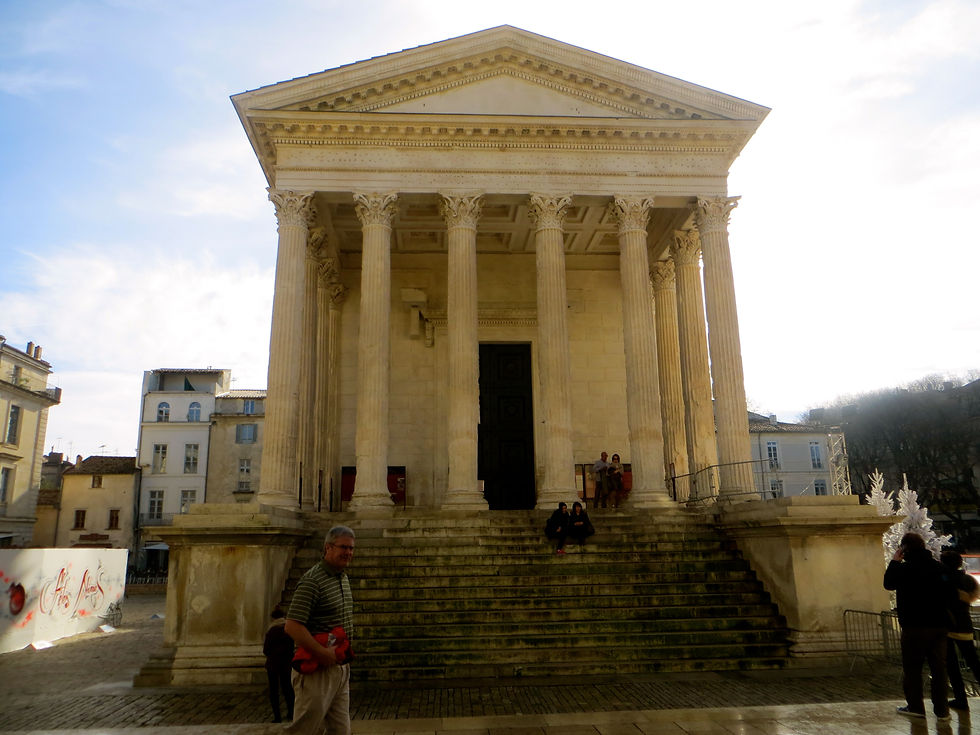
Nimes is also home to the Maison Carrée, one of the most well preserved Roman temples to be found anywhere in the territory of the former Roman empire. It was dedicated to Ceasar’s two sons upon completion in 16 BC.
We finished out Nimes with a bottle of Champagne and croques (French sandwiches usually with an egg on top). The January weather was so nice that we could sit outside on the plaza.


But just like that, the medieval era came and went and we moved on to the next: Barcelona.
Comments